Your 1925 Mercury Dime Could Be Worth Far More Than a Dime

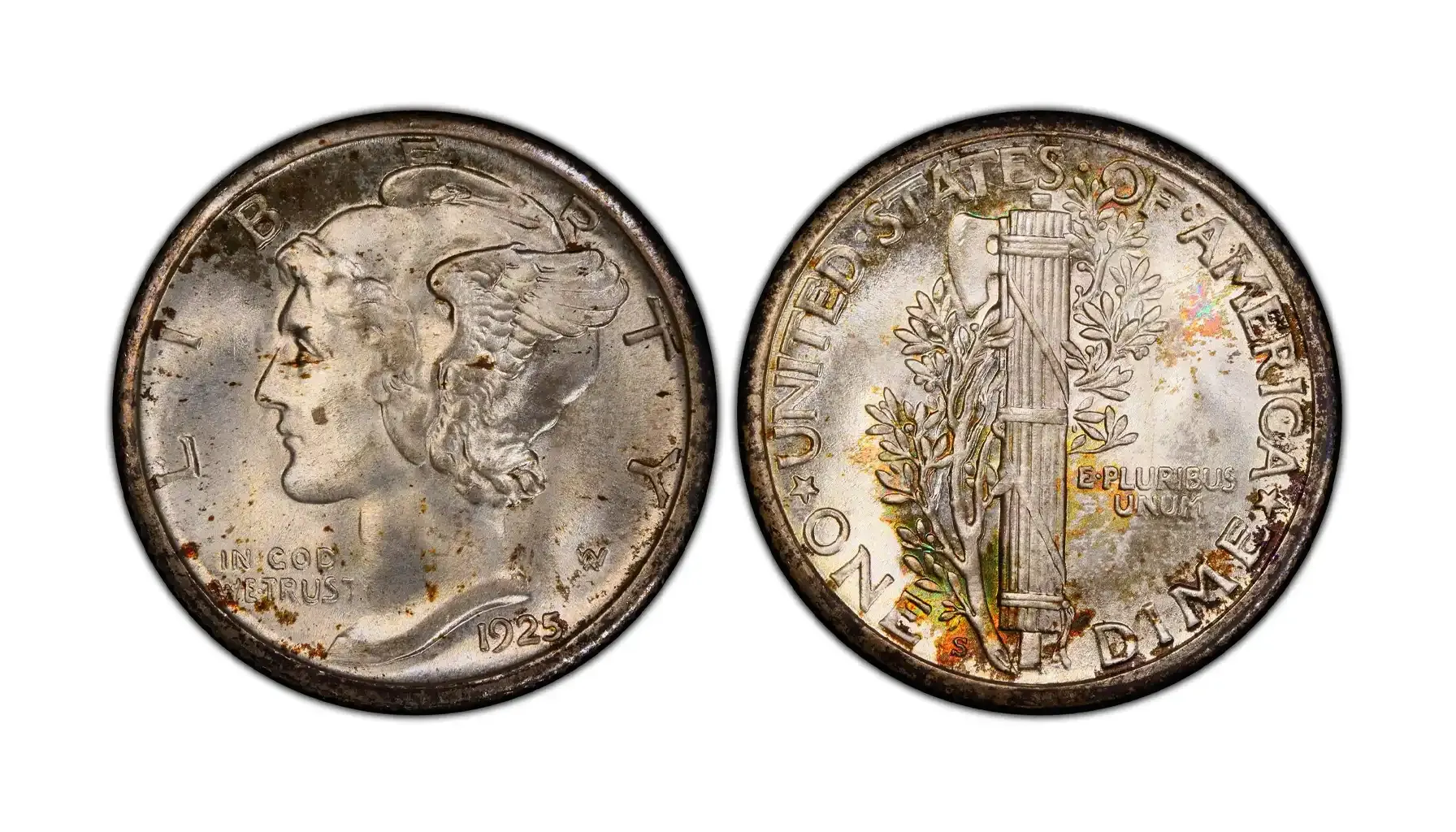
A 1925-S Mercury dime in superb gem condition has reached $74,750 at PCGS-tracked auctions. Even ordinary circulated examples carry real silver value, and the scarce 1925-D is a genuine key date. Know your mint mark, condition, and whether your coin has Full Bands — the details that separate a $9 coin from a $700 one.

★★★★★ 4.8 / 5  ·  Rated by 1,347 collectors
Check My 1925 Dime Value →
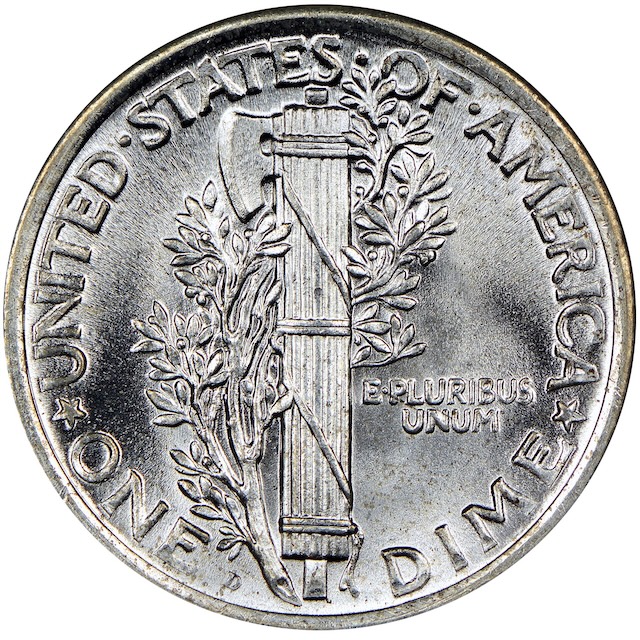
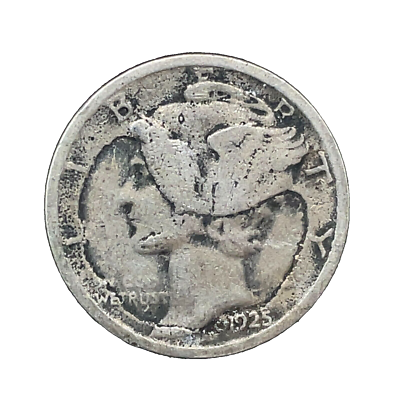
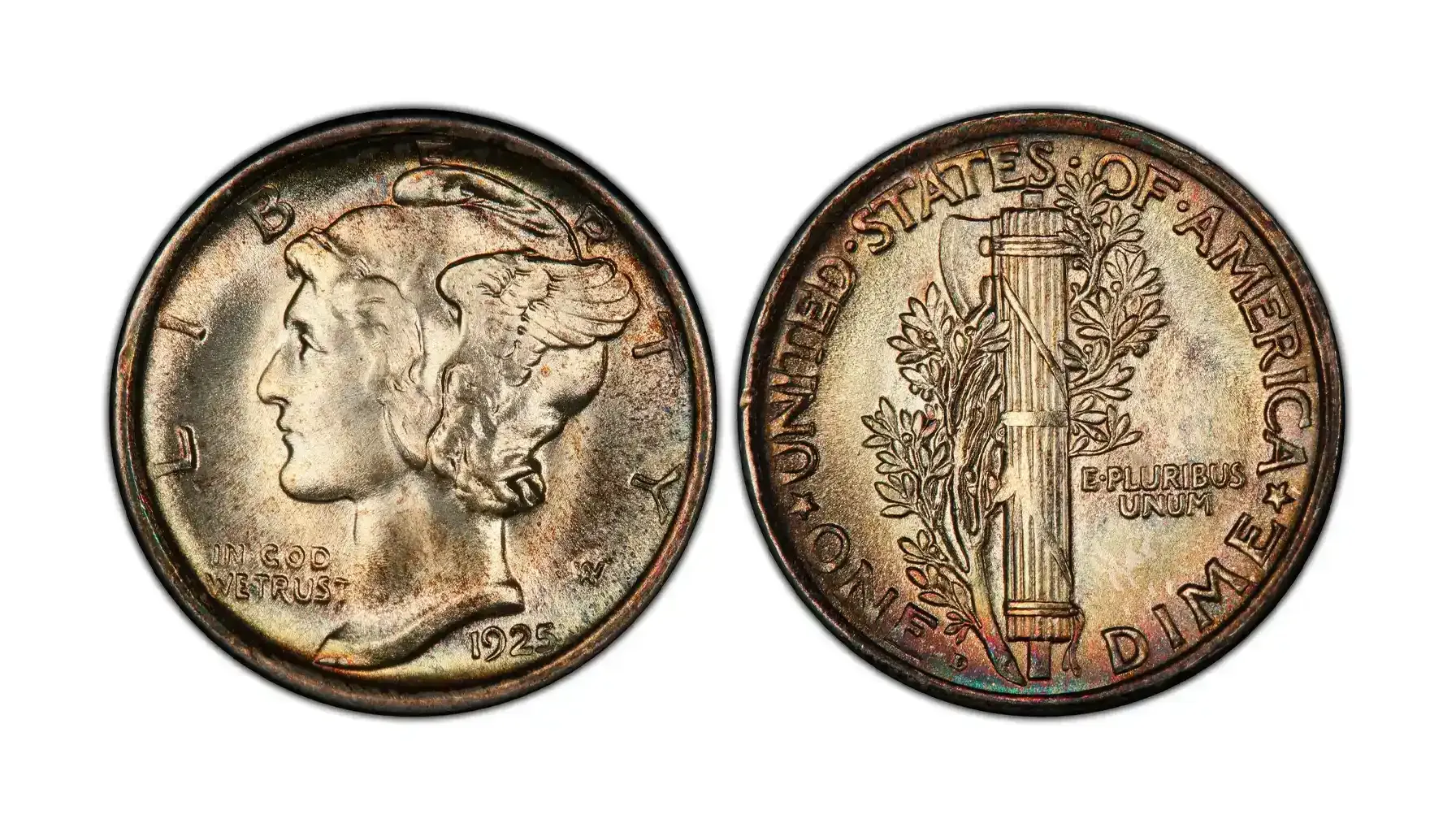
1925 Mercury dime obverse showing Liberty's winged cap and reverse fasces design
$74,750
Record sale — 1925-S in gem MS
36.6M
Total 1925 Mercury dimes minted
5,117,000
1925-D mintage — lowest of three mints
90%
Silver content (0.07234 troy oz)

Full Bands Self-Checker

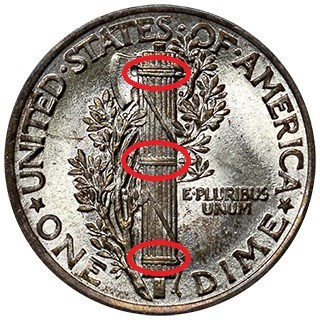
The Full Bands (FB) designation is the single most value-multiplying factor on a 1925 Mercury dime. A coin worth $42 uncirculated can jump to several hundred or even thousands of dollars if it qualifies. Use this checker to assess whether your coin might have Full Bands.

Side-by-side comparison of 1925 Mercury dime fasces without and with Full Bands designation

Left: typical soft strike (no FB) · Right: Full Bands example with complete central crossband separation

🔵 Common Strike (No FB)

  • Central bands appear flat or fused
  • Dividing line partly merged or absent
  • Soft, pillowy appearance under loupe
  • Typical of most 1925 examples

🟡 Full Bands (FB) — Premium!

  • Central bands show complete split line
  • Unbroken separation edge-to-edge
  • Sharp, crisp appearance under 10× loupe
  • Commands large collector premium

Check all four that apply to your coin:

Describe Your 1925 Dime for a Detailed Assessment

Not sure what you have? Describe what you see on your coin and get a tailored assessment. The more detail you provide, the more accurate the response.

📌 Mention these things if you can:

  • Mint mark (D, S, or none)
  • Whether bands on fasces look split
  • Liberty's portrait sharpness
  • Any visible toning or luster
  • Signs of cleaning or polishing

💡 Also helpful:

  • Coin edge: reeded and sharp?
  • Overall color (silver-white, toned, dull)
  • Any unusual features (peeling, wide strike)
  • Where you acquired it
  • If it's been certified by PCGS/NGC

Want a Precise Number, Not Just a Description?

The description analyzer gives you context — the calculator gives you a value. Takes 15 seconds.

Use the Value Calculator →

Free 1925 Mercury Dime Value Calculator

Answer three quick questions to get your estimate. Step through the wizard below.

1
2
3

Step 1 of 3 — Mint Mark

Where was your coin struck? Check the reverse just right of "E" in ONE.

Step 2 of 3 — Condition

How worn is your coin?

Step 3 of 3 — Special Varieties

Check any that apply to your coin:

If you're not yet sure about your coin's mint mark or condition, there's a 1925 Mercury Dime Coin Value Checker free online tool that lets you upload photos of your coin so an AI can help identify the details for you.

📋 What's on This Page

The Valuable 1925 Mercury Dime Errors & Varieties (Complete Guide)

The 1925 Mercury dime series isn't loaded with catalogued doubled dies, but the varieties and errors that do exist represent genuine collector treasures. From the scarce Denver key date to the dramatic premium commanded by Full Bands specimens and physical mint errors, these five varieties cover the full spectrum of what makes a 1925 dime worth hunting.

1925-D Mercury dime reverse close-up showing D mint mark position
1925-D — The Denver Key Date
MOST VALUABLE
$6 – $3,450+

The 1925-D Mercury dime is the most coveted date-mint combination from the 1925 issue, produced at the Denver Mint with a relatively modest mintage of just 5,117,000 coins. That production figure is less than a fifth of the Philadelphia output, and surviving high-grade examples are genuinely difficult to locate. The 1925-D carries a substantial premium at every grade level above Good.

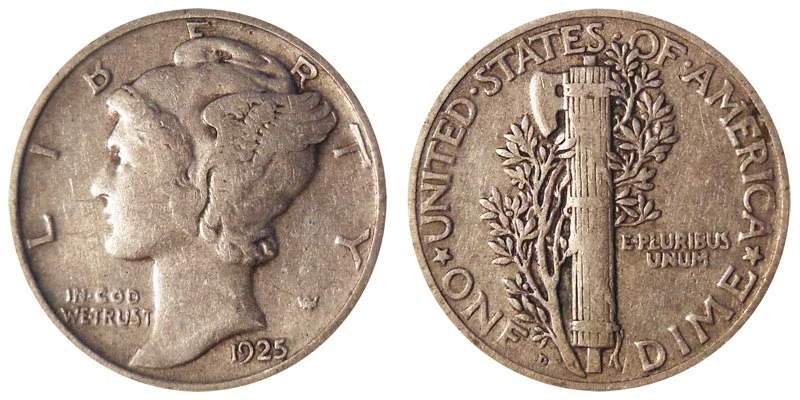
Visually, identifying the Denver issue requires finding the small "D" mint mark on the reverse, located just to the right of the letter E in the word ONE. On well-worn examples, this mark can be partially obliterated; on Extremely Fine or better coins, it should read clearly with a loupe. The obverse features Liberty's winged cap in left-facing profile, and the sharpness of her facial features and wing feathers directly signals grade.

Collectors pay a steep premium for the 1925-D because high-grade survivors are genuinely uncommon, and Full Bands examples are among the most elusive in the entire Mercury dime series. Stack's Bowers specifically names the 1925-D alongside the 1926-S and 1927-D as prime issues where Full Bands examples are a major rarity — meaning a gem FB specimen can climb into the thousands with ease.

How to spot it
Find the "D" on the reverse just right of the E in ONE. Use a 10× loupe to confirm it's a D, not a die gouge. The letter has a distinct D-shape with a curved right side.
Mint mark
D (Denver) — reverse, right of E in ONE
Notable
PCGS auction records show the 1925-D MS has topped $40,800. In Extremely Fine condition, examples trade for $100–$120, roughly 5–7× the Philadelphia equivalent in the same grade.
1925 Mercury dime Full Bands close-up showing complete central crossband separation on the fasces
Full Bands (FB) Designation
MOST FAMOUS
$50 – $43,000+

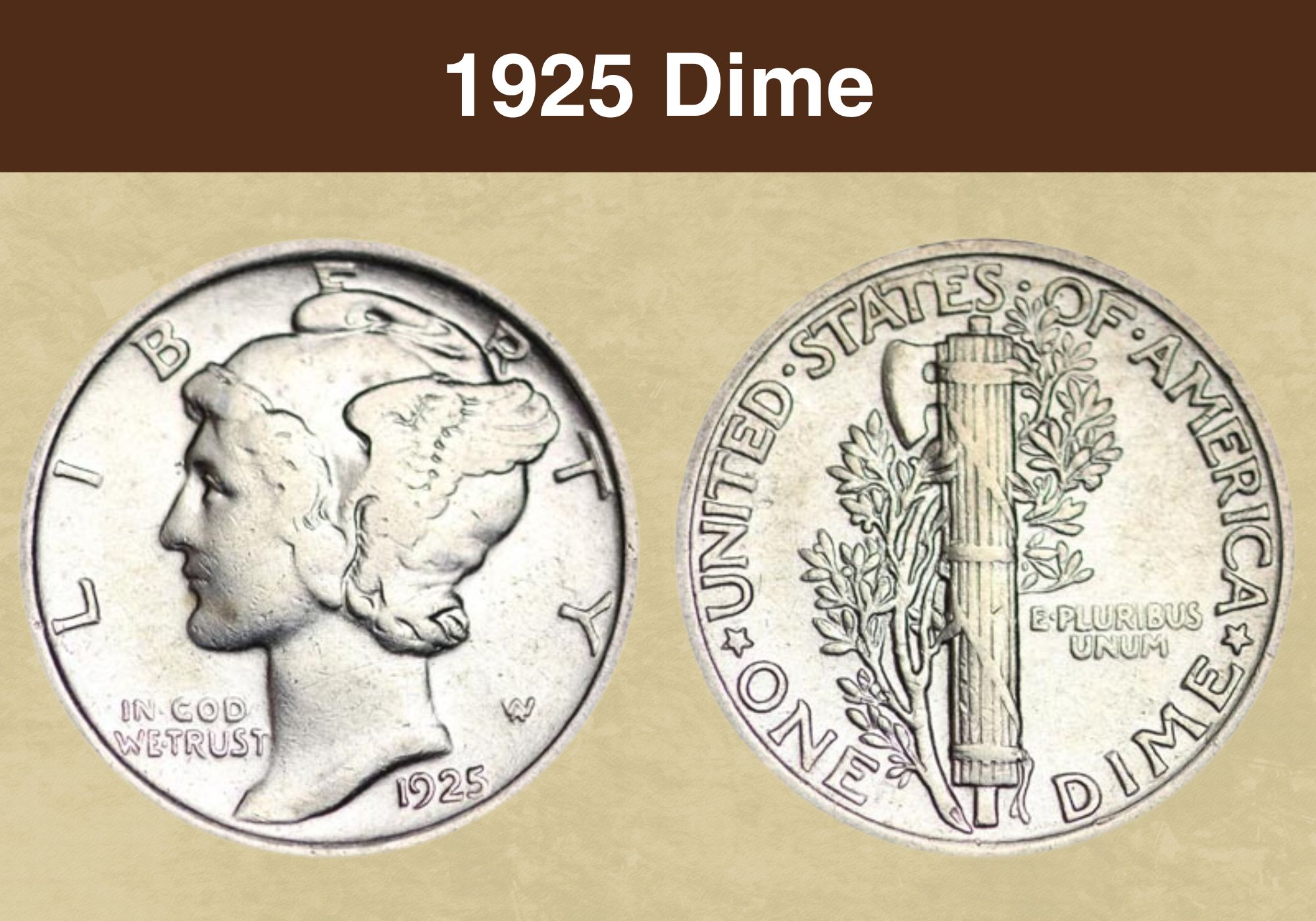
The Full Bands designation — abbreviated FB by grading services — is granted to Mercury dimes where the central crossbands on the fasces reverse device show a complete, unbroken separation line between the two halves of the middle band. Because mint workers would sometimes widen die spacing to extend die life, the central bands were frequently under-struck, making a fully struck example genuinely uncommon on most Mercury dime issues. The 1925 Philadelphia issue has a Greysheet ceiling of $43,000 in MS with FB.

To qualify, a 10× loupe examination must reveal a clean, continuous groove running the full width of the central crossbands with no merging at any point. Any interruption — including a small nick or a partially fused area — disqualifies the coin for the FB designation. On the 1925-S, Greysheet values for FB examples in top MS grades reach $36,000, reflecting both strike quality and survival rarity in pristine condition.

Collectors prize FB coins for their visual perfection and as evidence of die sharpness that was not universal in production. The premium attached to FB designation varies by date and mint — for the 1925 issues, MS FB examples routinely sell at 5× to 20× the value of an equivalent non-FB coin of the same grade. PCGS and NGC both award the FB designation starting at MS60, with no exceptions for the 1925 issue.
How to spot it
Under 10× loupe, examine the middle of the three band sets on the fasces reverse. A complete, unbroken dividing line must run edge-to-edge with no merging at any point along the central crossbands.
Mint mark
All three mints (P, D, S) — FB is rarest on 1925-D issue
Notable
Greysheet lists 1925 MS FB ceiling at $43,000; 1925-S MS FB at $36,000. PCGS and NGC award the FB designation; third-party certification is strongly recommended before selling any FB specimen.
1925 Mercury dime broad-strike error showing expanded diameter and flat edge area
Broad Strike Error
BEST KEPT SECRET
$50 – $300+

A broad strike error occurs when the coin planchet sits outside or partially outside the retaining collar die at the moment of striking. Without the collar to confine the metal, the force of the hammer die spreads the planchet laterally, producing a coin that is noticeably wider than the standard 17.9mm diameter. The design elements are still present but appear slightly stretched or expanded.

On a 1925 broad strike, the most visible diagnostic is the edge of the coin: instead of the standard fully reeded edge, a broad-struck coin shows a flat, blank border where the rim should be. Because the collar controls the reeding process, its absence at strike means part or all of the edge lacks standard reeding. The letters of LIBERTY and the date on the obverse may crowd toward the flat rim.

A documented 1925 Philadelphia dime with a broad-strike error was offered in AU55 grade, with the letters E and R on LIBERTY approaching the edge. This example sold for over $100 according to CoinValueChecker research. Larger, more dramatic broad strikes in better condition command stronger premiums. Error coin specialists and mint-error focused dealers are the best buyers for these pieces.

How to spot it
Measure the coin's diameter: standard is 17.9mm. A broad-strike will exceed this. The edge shows a flat, blank area lacking normal full reeding. All design elements remain visible but may appear spread outward.
Mint mark
P (Philadelphia) documented; potentially any mint
Notable
A 1925 broad-strike in AU55 sold for over $100 per CoinValueChecker records. Higher-grade examples with dramatic expansion are significantly more valuable; strong collector demand from the error coin specialty market.
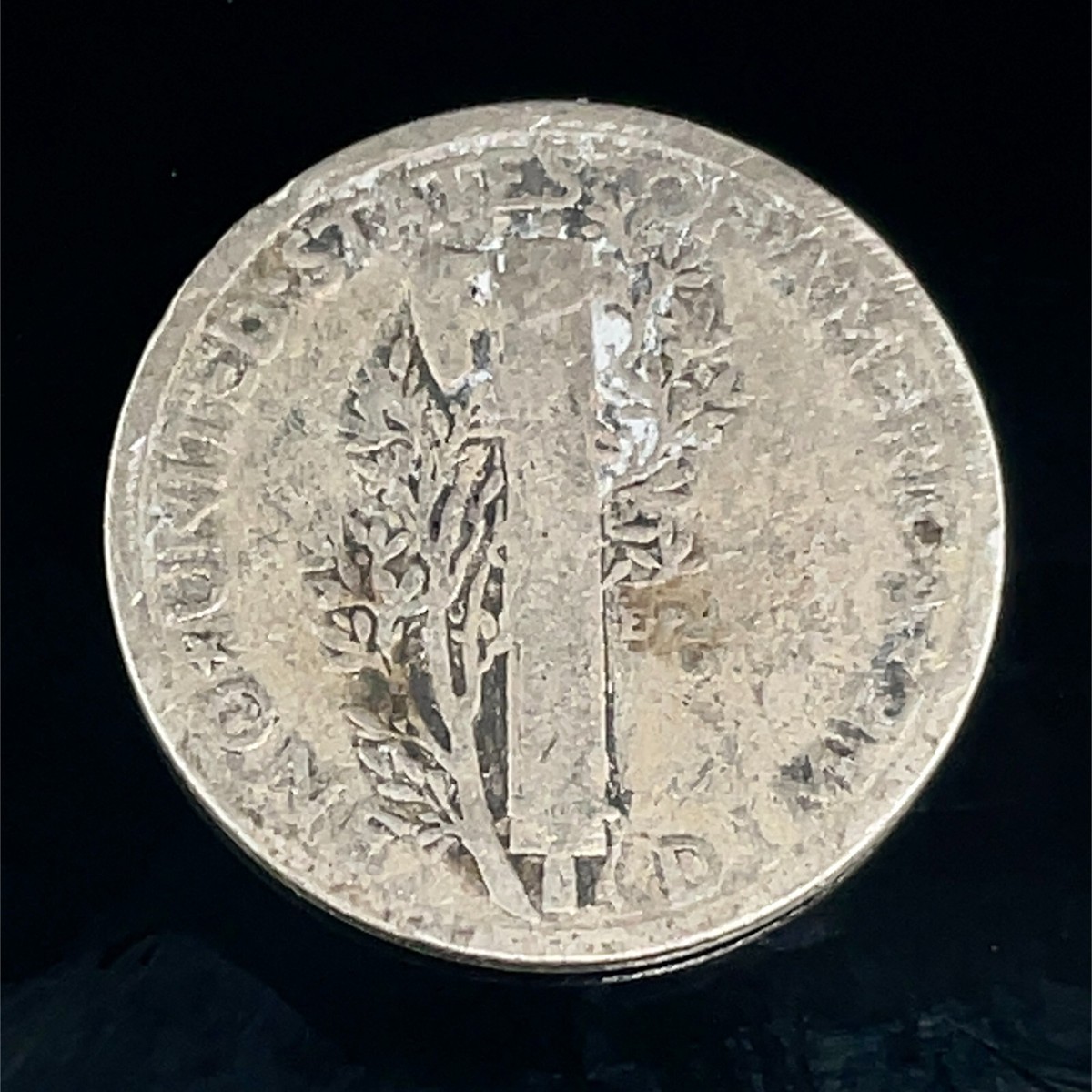
1925 Mercury dime lamination error showing surface peeling and metal separation on obverse
Lamination Error
RAREST ERROR
$29 – $200+

Lamination errors arise when a foreign substance — typically sulfur, oxide inclusions, or other metallic impurities — becomes entrapped within the coin's silver-copper alloy planchet during the rolling or annealing stages of production. When the coin is struck, the contaminant creates a weak layer in the metal that later separates, cracks, or partially peels away from the coin's surface. These errors can appear immediately after striking or develop years later.

On a documented 1925 Philadelphia dime with a major lamination error, a large crack was visible on the obverse running from approximately the 9 o'clock position downward to the 6 o'clock position — across the lower left quadrant. The remaining surfaces retained enough detail for authentication, and the motto IN GOD WE TRUST was still fully legible. The coin showed heavy wear consistent with a heavily circulated example.

Despite its worn state, this lamination example sold for $29 on eBay, demonstrating that even modest lamination errors attract collector interest. Larger, more dramatic laminations — especially those on Uncirculated or lightly circulated coins where the peeling or separation is three-dimensional and visually striking — can command considerably higher premiums from mint-error specialists. Condition is key: an AU or MS coin with a dramatic lamination can sell for $100 or more.

How to spot it
Look for cracked, peeling, or partially separated metal on the obverse or reverse surface. The separation creates a thin flap or raised ridge of metal. Under raking light, the delaminated area casts a distinct shadow revealing its three-dimensional texture.
Mint mark
P (Philadelphia) documented; planchet defects can occur at any mint
Notable
A heavily worn 1925-P lamination error sold for $29 per CoinValueChecker and eBay records. Lamination errors on higher-grade Mint State coins with dramatic peeling can exceed $100–$200 from mint-error specialty dealers and collectors.
1925 Mercury dime off-center strike error showing design shifted from center position
Off-Center Strike
MOST DRAMATIC
$50 – $400+

An off-center strike results when the coin planchet is not properly centered under the die at the moment of striking. The amount of misalignment can range from a minor shift of just a few percent — where all design elements are still present but crowded to one side — to dramatic examples where 30%, 50%, or more of the design is missing, replaced by a blank crescent of unstruck metal. Both types attract collector interest, but the most dramatic off-center strikes with visible date command the highest prices.

For a 1925 Mercury dime, the key diagnostic is the presence of a crescent-shaped blank area on one side of the coin, opposite the direction of the design shift. On a moderately off-center example, Liberty's portrait may be intact but shifted to one quadrant while the opposing edge shows raw, unstruck planchet metal. Collectors specifically seek off-center strikes where the date is still readable — "date visible" is an important qualifier in off-center error coin pricing.

Value for off-center strikes scales with the degree of misalignment and whether the date remains visible. A 10–15% off-center dime with a clear date might bring $50–$100, while a 40–50% off-center example with a visible date can reach $300–$400 or more from dedicated error coin specialists. The 1925 dime's silver content ensures even modest off-center strikes have a meaningful base value above their silver melt.

How to spot it
Look for a blank, unstruck crescent of metal on one edge of the coin, with the design shifted to the opposite side. The rim will be incomplete or absent in the blank area. Confirm the date is still visible — this dramatically affects collector value.
Mint mark
Can occur at any mint (P, D, or S); off-center errors are not mint-specific
Notable
Off-center strikes with 30–50% misalignment and a visible date are the most sought-after. Coin error specialist dealers and major auction houses such as Heritage Auctions regularly handle dramatic off-center Mercury dimes. Value ranges from $50 to several hundred dollars depending on shift percentage, date visibility, and condition.

Found One of These Errors on Your Coin?

Calculate exactly what it might be worth — just select your mint mark, condition, and tick the matching error box.

Calculate My Error Coin Value →

1925 Mercury Dime Value Chart at a Glance

These values reflect current market conditions based on PCGS auction data and dealer price guides. For a comprehensive in-depth 1925 Mercury dime identification walkthrough and reference guide, including photo comparisons across all grade levels, visit the linked resource. Full Bands (FB) values are listed separately where data is available.

Variety / Mint Worn (G–F) Circulated (XF–AU) Uncirculated (MS60–63) Gem (MS64+)
1925-P (Philadelphia) $5 – $10 $17 – $30 $42 – $75 $315 – $1,000+
⭐ 1925-P Full Bands (FB) N/A (MS only) N/A (MS only) $50 – $250 $1,450 – $43,000+
🔥 1925-D (Denver) $6 – $21 $60 – $116 $300 – $700+ $1,200 – $3,450+
1925-D Full Bands (FB) N/A (MS only) N/A (MS only) $550 – $1,500 $5,000 – $24,500+
1925-S (San Francisco) $5 – $12 $30 – $96 $100 – $285+ $500 – $2,700+
1925-S Full Bands (FB) N/A (MS only) N/A (MS only) $495 – $1,500 $3,000 – $36,000+

⭐ = Signature variety (Full Bands)   🔥 = Rarest mint (1925-D)   Values are approximate ranges; actual auction results vary. Silver melt floor: ~$5–7.

📱 CoinKnow can cross-check your coin's details against current market prices instantly on the go — a coin identifier and value app.

1925 Mercury Dime Mintage & Survival Data

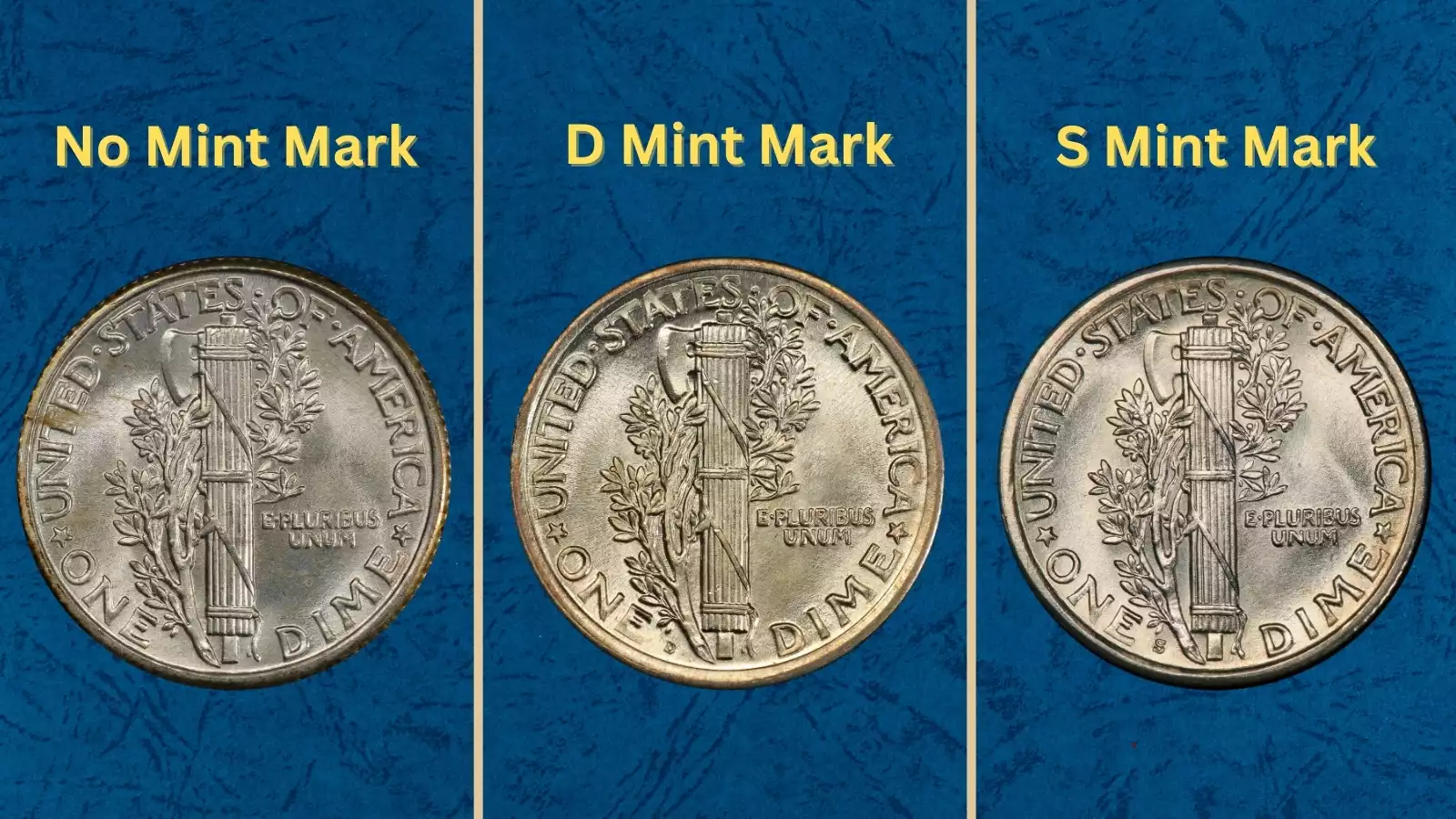
1925 Mercury dime mint comparison showing Philadelphia, Denver, and San Francisco examples

1925 Mercury dimes from Philadelphia (no mark), Denver (D), and San Francisco (S) — three mints, three very different values

Mint Mint Mark Mintage % of Total Notes
Philadelphia None 25,610,000 69.9% Most common; baseline value coin
San Francisco S 5,850,000 16.0% Mid-rarity; premium in high grades
Denver D 5,117,000 14.0% Lowest mintage; key date of 1925
TOTAL 36,577,000 100% All business strikes; no proofs struck
Composition & Specifications: 90% silver, 10% copper · Weight: 2.50 grams · Diameter: 17.9mm · Edge: reeded · Designer: Adolph A. Weinman · No proof coins were struck in 1925 for the Mercury dime series. Silver melt content: 0.07234 troy oz per coin.

How to Grade Your 1925 Mercury Dime

Grading a Mercury dime requires examining specific high points on both sides. The obverse focal points are Liberty's cheek, hair above her eye, and the wing feathers above her ear. The reverse focal points are the fasces bands and the olive branch leaves.

1925 Mercury dime grading strip showing Good, Fine, Extremely Fine, and Mint State condition examples

Grade comparison: Good (G-4) · Fine (F-12) · Extremely Fine (EF-40) · Mint State (MS-63)

Worn (Good/Fine · G–F)

Heavy wear has flattened Liberty's portrait to an outline. Feather detail in the wing is absent or barely visible. On the reverse, the fasces rods have worn nearly smooth and the bands are flat. The date and lettering remain readable but the rim blends into letters. Value: roughly silver melt ($5–$12).

Circulated (XF–AU)

Extremely Fine: slight wear only on highest points — Liberty's cheek has minor flatness but individual hair strands are visible, and all feather details in the wing are separated. The fasces bands show some wear but diagonal bands remain bold. About Uncirculated: only the slightest trace of wear on cheek and cheekbone under magnification; most luster present.

Uncirculated (MS60–MS63)

No trace of wear anywhere on the coin's surface. The full mint luster flows across both obverse and reverse. However, bag marks from contact with other coins in mint bags are visible under magnification. The central bands on the fasces may still be soft (not FB) even on uncirculated examples. Value varies dramatically based on strike quality and band separation.

Gem (MS64+)

Superb preservation with minimal marks and exceptional luster. At MS65 and above, the coin displays outstanding eye appeal. The coveted Full Bands (FB) designation is particularly important here — an MS65 FB example is worth many times an MS65 non-FB coin. Gem coins should be submitted to PCGS or NGC for certification before any significant sale.

Pro Tip — Color and Strike: Mercury dimes develop a characteristic silver-white to pale gold toning over decades. Natural, original toning is desirable and adds to eye appeal. Artificially toned or cleaned coins grade at a discount. For Full Bands attribution, no grading service will certify FB on a cleaned or altered coin regardless of the band separation quality. Always store Mercury dimes in inert, PVC-free holders.

🔎 CoinKnow lets you compare your coin's surface details against graded reference images to help match condition tiers — a coin identifier and value app.

Where to Sell Your Valuable 1925 Mercury Dime

The right venue depends on your coin's grade and variety. A worn common-date 1925-P is fine for a local shop or eBay; a gem FB or key-date 1925-D deserves a major auction house.

🏆 Heritage Auctions

The world's largest numismatic auction house. Best for gem uncirculated examples, Full Bands specimens, and the 1925-D in high grades. Heritage's bidder network ensures competitive prices from serious collectors. Submit certified PCGS or NGC coins for best results. Buyer's premium applies, and the process typically takes 2–4 months from submission to sale.

💻 eBay

The most active secondary market for Mercury dimes at all grade levels. Search recently sold prices for 1925 Mercury dimes on eBay to gauge current demand before listing. Circulated examples, error coins, and lower-grade uncirculated pieces typically perform well here. Use "Buy It Now" for common dates and auction format for scarcer pieces where competition between bidders drives the price up.

🏪 Local Coin Shop (LCS)

Quick, cash-in-hand transactions with no fees or shipping risk. Dealers typically pay 60–80% of retail for common circulated coins and somewhat more for key dates. Ideal for worn 1925-P examples or silver-melt coins where speed matters more than maximizing return. Call ahead to confirm the dealer specializes in early 20th-century U.S. silver coinage.

💬 Reddit r/Coins4Sale

Collector-to-collector sales with no dealer markup — you keep more of the value. Popular for mid-grade circulated examples ($15–$75 range). Post clear photos in good lighting showing both obverse and reverse. The community is knowledgeable about Mercury dimes and will help you price fairly. Best for coins you've already had attributed or certified.

💎 Get It Graded First: Any 1925 Mercury dime showing potential Full Bands, or a 1925-D in Extremely Fine or better condition, should be submitted to PCGS or NGC before selling. The cost of third-party grading ($20–$50 per coin) is trivial compared to the premium a certified grade adds — especially for FB attribution, which can multiply value 5–20×. Never sell a potentially significant coin raw.

Frequently Asked Questions — 1925 Dime Value

What is a 1925 Mercury dime worth?
A worn 1925 Philadelphia dime is worth around $5–$9 in Good condition, rising to $17 in Extremely Fine. Uncirculated examples fetch $42–$75 and gem MS65 pieces can reach $315 or more. The 1925-D is the most valuable: Extremely Fine examples bring $100–$120 and uncirculated specimens regularly sell for several hundred dollars or more.
How do I know if my 1925 dime has Full Bands?
On the reverse, look at the fasces — the bundle of sticks held together by three sets of bands. The central (middle) set of crossbands must show a complete, unbroken separation line between the two bands all the way across. If that dividing line is fully split with no merging at any point, the coin qualifies for the FB (Full Bands) designation. A 10× loupe is strongly recommended for this inspection.
What is a 1925-D Mercury dime worth?
The 1925-D had a low mintage of just 5,117,000 and is considered a key date in the Mercury dime series. Good examples trade for around $6–$10, Fine examples bring $20–$25, and Extremely Fine specimens typically sell for $100–$120. Uncirculated coins are quite scarce and can fetch $700 or more, with Full Bands examples commanding several thousand dollars.
What is the rarest 1925 dime?
In terms of raw mintage, the 1925-D at 5,117,000 is the scarcest date. However, for premium collectors, the 1925-D with Full Bands designation is among the most elusive coins in the entire Mercury dime series. Stack's Bowers specifically lists the 1925-D as a prime example of an issue where Full Bands examples are extremely rare, often bringing several thousand to tens of thousands of dollars.
What errors exist on the 1925 Mercury dime?
The 1925 Mercury dime is not known for many catalogued varieties, but several mint errors have surfaced. The most notable are broad-struck errors (the coin extends beyond normal diameter due to a loose collar die) and lamination errors (peeling or cracking of the planchet surface caused by metallic impurities). Off-center strikes and die cracks also exist. Error coins in better condition can sell for $50 to several hundred dollars.
How much silver is in a 1925 dime?
A 1925 Mercury dime contains 0.07234 troy ounces of pure silver. The coin weighs 2.50 grams with a composition of 90% silver and 10% copper. At current silver spot prices (which fluctuate), the melt value of a 1925 dime is typically around $5–$7, which acts as a floor value even for heavily worn examples.
What does the 'D' mint mark on a 1925 dime mean?
The 'D' mint mark on a 1925 dime indicates it was struck at the Denver Mint in Colorado. On Mercury dimes, the mint mark is found on the reverse (tail side) just to the right of the E in ONE. Denver-minted 1925 dimes had the lowest production at 5,117,000 coins, making them significantly rarer than the Philadelphia issue and commanding substantial premiums especially in Extremely Fine and Uncirculated grades.
Is a 1925 dime made of silver?
Yes. All Mercury dimes, including the 1925 issue, are struck in 90% silver and 10% copper alloy. This composition was used for all dimes minted from 1796 through 1964. The 1925 dime weighs 2.50 grams and has a diameter of 17.9mm. Even the most worn examples retain intrinsic silver value as their baseline worth.
What is the highest price ever paid for a 1925 Mercury dime?
According to PCGS auction price data, the highest recorded sale for a 1925-S Mercury dime in MS grade reached $74,750. The 1925 Philadelphia dime in MS grade has topped $45,600 at auction, while the 1925-D MS has reached $40,800. These record prices were achieved for superb gem examples, often with the coveted Full Bands designation.
Should I clean my 1925 Mercury dime?
Never clean a 1925 Mercury dime. Cleaning removes the original surface luster and patina, leaving microscopic hairlines that drastically reduce a coin's grade and collector value. A cleaned coin that might have been worth $75 in AU condition could drop to $15–$20 after cleaning. Grading services flag cleaned coins as 'details' grades, which trade at a significant discount. Store your coin in a non-PVC holder and leave the surface completely undisturbed.

Ready to Find Out What Your 1925 Dime Is Worth?

The free calculator takes 15 seconds. Select your mint mark, condition, and any errors — and get a research-backed value estimate instantly.

Calculate My 1925 Dime Value →